
What Is Tempered Glass?
Tempered glass is safety glass strengthened by heat treatment. It resists impacts and sudden temperature changes better than ordinary glass and is used in steel doors, building entrances, offices and other architectural applications where safety and appearance matter.
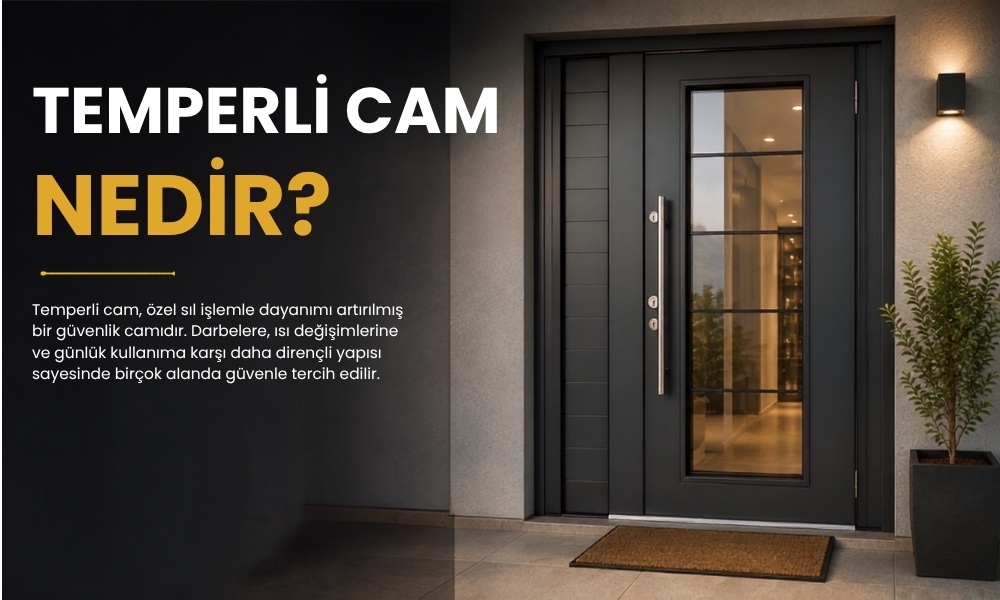
During manufacture, ordinary glass is heated to a high temperature, then rapidly cooled under controlled conditions. This increases mechanical strength and can improve resistance to impacts, sudden temperature changes and the stresses of everyday use.
Tempered glass is used in steel doors, building entrances, office partitions, shopfronts, shower enclosures and balcony systems because of its strength and the way it breaks. It suits projects that require both an attractive finish and safer glazing.
Tempered glass comes in different thicknesses, colours and designs. Depending on the application, it can be considered alongside laminated glass or other types of safety glass.
General Properties of Tempered Glass
Heat treatment changes the distribution of stress at the glass surface, making it more resistant to mechanical loads than ordinary glass. This makes it a common choice in busy areas and where safety is important.
Tempered glass can be clear, smoke tinted, bronze, reflective or decorative to suit modern and traditional architecture.
Its main properties include the following.
- High impact resistance
- Better resistance to sudden temperature changes
- Smooth, high quality finish
- Available in several thicknesses
- Clear and tinted options
- Easy to clean
- Appearance suited to modern architecture
- Compatibility with many metal and aluminium systems
| Property | Description |
|---|---|
| Strength | Can provide greater mechanical resistance than ordinary glass. |
| Surface quality | Provides a smooth, attractive finish. |
| Transparency | Maintains high light transmission. |
| Applications | Can be used indoors or outdoors. |
| Design | Available in different colours and thicknesses. |
Choose the size and thickness to suit the intended location and check compatibility with other building components.
Where Is Tempered Glass Used?
Its strength and appearance make tempered glass useful in residential, commercial, industrial and public buildings.
Common applications include the following.
- Steel doors
- Villa entrance doors
- Building entrance doors
- Aluminium framing systems
- Glass doors
- Office partitions
- Shopfronts
- Shower enclosures
- Balcony glazing
- Glass balustrades
- Lift installations
- Furniture glazing
The right thickness varies with the intended use, opening size, supporting system and project requirements.
Shopfronts may use large panes, while steel doors can use different glazing sizes to balance safety and appearance. For balcony systems, the support details and intended use are particularly important.
What Are the Benefits of Tempered Glass?
Tempered glass increases strength while retaining an attractive appearance. It suits projects with both decorative and functional requirements.
- Greater impact resistance
- Long service life
- A modern look
- Different design options
- Easy cleaning
- High light transmission
- Compatibility with different metal systems
- Flexibility in architectural design
Its strength can support longer service in areas subject to frequent use. The range of thicknesses makes it suitable for different projects.
Specify the size, thickness, colour and installation details to suit the intended application.
Tempered Glass Compared with Ordinary Glass
The main differences are the manufacturing process, impact resistance and breakage behaviour. Ordinary glass can be used without further strengthening. Tempered glass is heated and rapidly cooled under controlled conditions to change its surface stresses and increase strength.
This process improves resistance to impacts and sudden temperature changes. Tempered glass is commonly chosen for doors, shopfronts, shower enclosures, balcony systems and busy architectural spaces.
| Comparison | Tempered glass | Ordinary glass |
|---|---|---|
| Manufacturing process | Undergoes controlled heat treatment. | Undergoes no additional tempering. |
| Impact resistance | Can be higher than that of ordinary glass. | May be more susceptible to impact. |
| Temperature changes | More resistant to sudden temperature changes. | Can be more affected by thermal changes. |
| Breakage | Usually breaks into small, less sharp pieces. | Can break into larger, sharp pieces. |
| Typical use | Used where safety and durability are important. | Can be used in standard applications with lower risk. |
| Further processing | Cutting or drilling after tempering is unsuitable. | Can be processed further with suitable methods. |
Final dimensions, holes, grooves and edge finishing must be completed before tempering. Cutting or drilling afterward can compromise the pane and cause it to break.
Confirm these details before placing an order.
- Width and height
- Glass thickness
- Edge finish
- Positions of holes or grooves
- Colour and appearance
- Frame or door system
- Indoor or outdoor use
Greater strength alone does not make tempered glass suitable for every application. Consider laminated tempered glass or other glazing combinations based on fall risk, impact, security needs and intended use.
Tempered Glass in Steel Doors
Tempered glass can provide safety, natural light and a decorative finish in steel doors. Common applications include villa and building entrances, doors with two leaves and systems with fixed side panels.
Glazing can make a solid steel door look lighter and brighten the entrance. Clear, smoke tinted, bronze, reflective and decorative glass can help match the architectural style.
Consider the metal profile, fixing method, gasket system and dimensions along with the glass type. The pane must not move inside the leaf or make unintended direct contact with metal.
Typical designs include the following.
- Glazed villa entrances: Can give the façade a brighter, modern appearance.
- Building entrances: Can bring natural light into shared entrance areas.
- Doors with fixed side glazing: A fixed pane can sit next to the leaf in wide openings.
- Doors with glazing above: The upper area can provide decoration or admit light.
- Glazed doors with two leaves: An option for wide villa and building entrances.
- Decorative glazing: Patterned, smoke tinted or bronze glass can complement the architecture.
Assess the size of the glazed area together with the door’s security requirements. For larger panels, consider the supporting frame and door body as well as glass thickness.
| What to check | Why it matters |
|---|---|
| Glass dimensions | Must match the door leaf and metal frame. |
| Glass thickness | Depends on the intended use and panel size. |
| Fixing system | Helps prevent the glass from moving in the door. |
| Gaskets | Can reduce direct contact between glass and metal. |
| Door body | Must provide adequate support around the glazing opening. |
| Outdoor conditions | Consider rain, sunlight, wind and temperature changes. |
| Privacy | Consider smoke tinted, reflective or patterned glass. |
Doors required to resist fire need fire resistant glazing covered by the door system’s tests and technical documents. Standard tempered glass alone does not meet that requirement.
Before manufacture, confirm door dimensions, glazing position, opening direction, interior and exterior designs and colour choices. Glass dimensions cannot be changed after tempering, so accurate measurements are essential.
Why Choose Brango Steel Doors?
Brango Steel Door manufactures glazed and solid steel doors for different architectural needs. Dimensions, colours, glazing and accessories can be planned together for apartment entrances, villas, building entrances and project orders.
Brango considers the door body, metal frame, glass dimensions and design details together. This combines the appearance of glazing with the strength of a steel door.
Options include the following.
- Standard and custom dimensions
- Glazed villa entrance doors
- Models with one or two leaves
- Doors with fixed side glazing
- Clear, smoke tinted, bronze and decorative glass
- Modern and classic finishes
- A choice of colours and accessories
- Production planning for housing and commercial projects
- Domestic and export orders
When choosing a glazed steel door, consider the location, glazing dimensions, outdoor conditions, security needs, frame construction and installation along with appearance.
Contact Brango Steel Door for glazed models, custom dimensions and production options for your project.
Disclaimer. This article provides general information. Tempered glass dimensions, thickness, strength and intended use vary by project. Qualified specialists should specify the appropriate glass where fire resistance, fall protection or special security performance is required. Refer to the manufacturer’s technical information and project requirements for final specifications.