
What Is a Fire Door Certificate?
A fire door certificate documents the performance a door demonstrated under specified fire and smoke conditions through testing and documentation. When specifying a certified door, assess the model, dimensions, number of leaves, hardware and installation method together. See our fire door page for models and technical options.
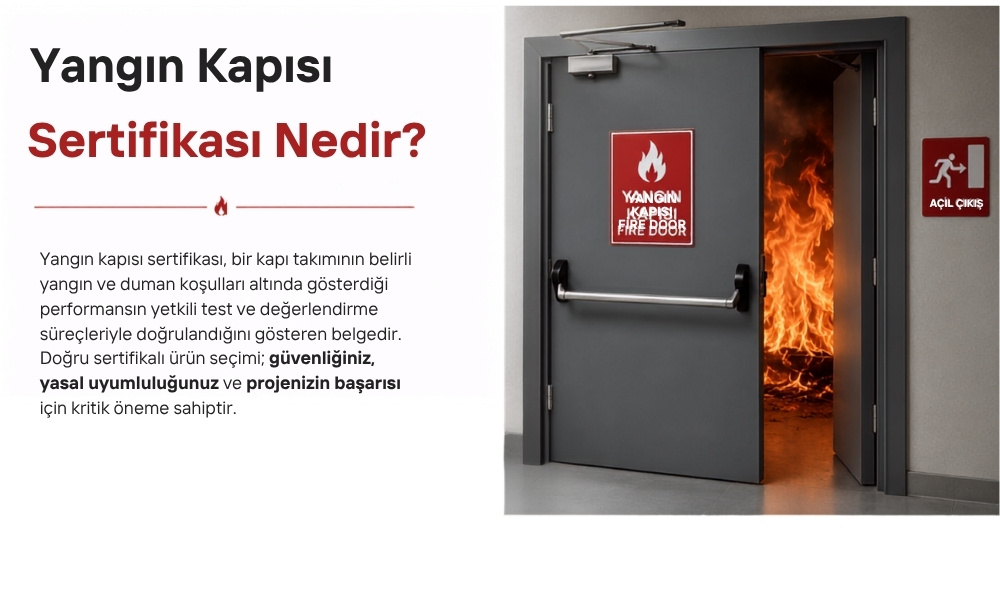
What Does a Fire Door Certificate Mean?
A fire door certificate describes how the relevant doorset performed in a specified test or assessment. It identifies the conditions and scope of the assessment and explains what the fire resistance claim covers.
Fire doors help limit the spread of fire and smoke between areas of a building, protect escape routes and give occupants time to evacuate. To perform as intended, the leaf, frame and hardware must work together as an assembly.
An assessment may cover the following components together.
- Door leaf and core construction
- Steel frame and wall fixings
- Hinges and safety components
- Lock or panic bar
- Door closer
- Smoke seals and intumescent fire seals
- Fire resistant glazing system where fitted
- Single or double leaf configuration
- Installation details and fixings
Changes to the components of the tested assembly may affect whether the door achieves the documented performance. Fitting a lock, hinge, glazing or panic bar outside the stated scope can take the door outside the assessed configuration.
The name and scope of the document depend on the country where the door is sold and the applicable regulations. Documents may include a test report, classification report, declaration of performance, conformity document or product certificate. Each serves a distinct purpose and should be used accordingly.
Why Choose a Certified Fire Door?
Certification supports the manufacturer's claims about fire performance with defined tests and assessments. This matters particularly in hotels, hospitals, schools, factories, warehouses, shopping centres, apartment buildings, offices and public facilities.
The certificate and related technical documents help the project team select a door. They show the assessed duration and performance class, available dimensions and permitted hardware.
The main benefits can include the following.
- Verifiable performance. Defined tests or assessments document the door's behaviour in a fire.
- Selection suited to the project. The rating and product features can be matched to the architectural plans.
- Technical transparency. The assessed sizes, hardware and installation conditions are documented.
- Easier inspections. Product documents can be reviewed during site acceptance or project inspections.
- Assembly integrity. The leaf, frame, lock, hinges and other components are assessed as a system.
- Export support. The documents may help prepare the conformity and performance evidence required in the destination country.
A certificate alone does not ensure performance. Incorrect installation, leaving a door open, disabling its closer or using incompatible hardware can impair performance. Consider selection, manufacture, shipping, installation and use together.
What Should You Check on a Fire Door Certificate?
Compare the product description in the document with the door you plan to buy. One document may cover only certain models, dimensions or hardware configurations from a manufacturer.
Check these details in the certificate and supporting documents.
- Name of the manufacturer or certificate holder
- Doorset model or product identification
- Single or double leaf configuration
- Tested or assessed door dimensions
- Fire resistance class or declared performance
- Whether a smoke control classification is included
- Key properties of the frame, leaf and core materials
- Approved hinges, locks and closers
- Whether panic or emergency exit hardware is covered
- Type and size of glazing on glazed models
- Permitted wall or partition type
- Opening direction and operating configuration
- Document number, issue date and validity details where applicable
- Details of the issuing laboratory or organisation
Pay particular attention to door dimensions. A door larger than the tested specimen, with a different frame or with two leaves may fall outside the assessed scope. If dimensions need to change, ask the manufacturer whether extended application evidence or a relevant technical assessment covers the proposed configuration.
A test report records the test results. A classification report assigns those results to a performance class under the applicable classification rules. A declaration of performance and conformity documents can serve different purposes depending on the system and the country where the product is marketed.
How Are Fire Resistance Duration and Door Specifications Determined?
Determine the required duration from the building's use, the fire compartment, the escape route, project requirements and applicable regulations.
Fire doors may be specified with durations of 30, 60, 90 or 120 minutes. The duration is only one aspect of performance. Check which characteristics the classification covers, such as integrity, insulation or smoke control.
The project lead, architect, fire consultant or qualified specialist should clarify the following before a door is selected.
- Building and location where the door will be used
- Required fire resistance duration
- Single or double leaf requirement
- Clear opening and frame dimensions
- Opening direction
- Need for a panic bar or handle
- Whether glazing or a louvre is required
- Smoke leakage requirements
- Door closer and other hardware
- Construction of the wall receiving the door
Choose a door that meets the project's required performance. A longer duration does not automatically make a door more suitable, and a mismatched specification can cause technical problems and unnecessary costs.
Check that any requested glazing, louvre or special hardware falls within the certificate and test scope. Cutting an opening for glass, adding a louvre or fitting different hardware to a standard door after manufacture can take it outside that scope.
What Should You Check When Buying a Certified Fire Door?
Start by identifying the project's technical requirements. Choosing by price or appearance alone may result in a door unsuitable for the intended location.
When requesting a quotation, prepare a door schedule and specify each door's dimensions, opening direction, number of leaves, colour, hardware and required performance. Different floors or areas of a large project may require different specifications.
Confirm the following in writing before ordering.
- Fire resistance class
- Whether the documentation covers the ordered model
- Single or double leaf configuration
- Frame and opening dimensions
- Right or left opening direction
- Choice of panic bar, lock or handle
- Door closer specifications
- Smoke and fire seals
- Glazing or louvre requirements
- Wall and installation conditions
- Shipping, packaging and delivery plan
- Who will perform the installation
The door must be manufactured to match the tested and assessed assembly. Avoid uncontrolled changes after manufacture. Consult the manufacturer if you need to replace a lock, hinge, panic bar or closer.
During installation, check that the frame is securely fixed to the wall, gaps are filled with the appropriate material, the door closes automatically and the latch engages properly with the strike. Keep the opening clear and avoid wedges or other devices that prevent the door from closing.
Inspect the door periodically after purchase. Arrange maintenance promptly if it is hard to close, rubs against the frame, has a faulty panic bar or has damaged seals.
Why Choose Brango Certified Fire Doors?
Brango Steel Door offers fire door options for different buildings and projects. Models with one or two leaves, panic bars, louvres and various colours can be assessed against the dimensions and technical requirements of the project.
When ordering, share the door size, intended location, opening direction, required duration and hardware options with Brango. The team can use this information to plan a product that meets the project's technical and aesthetic needs.
Brango can review the following together.
- Selection of a fire door model for the project
- Single and double leaf production options
- Different sizes and colours
- Panic bar, lock and handle options
- Glazed or louvred configurations
- Production planning for large projects
- Shipping arrangements for domestic and export orders
- Technical documentation relevant to the order
Share the full project details when requesting a quotation. The scope of the certificates and technical documents can vary by product. Ask for the documents applicable to the model you intend to purchase.
Contact Brango for models, pricing, specifications and production options. The team can assess your project based on the number of doors, dimensions, required duration, hardware and delivery details.
Disclaimer. This article provides general information. Project approval, regulatory interpretation, technical specifications and binding product certification require separate documentation or assessment. Qualified specialists should determine the required performance class based on building use, project requirements and applicable regulations. Before ordering, check that the documentation covers the selected model, dimensions, hardware and installation method.