
What Are Steel Doors Made Of?
Steel doors are assemblies made from steel sheet, structural members, a frame, surface panels, core materials, locks, hinges and other hardware.
The outer panel is only one part of a steel door. Durability, operation and quality depend on how the body, frame, finish, lock, hinges and other components work together. Consider the whole assembly when choosing a steel door.
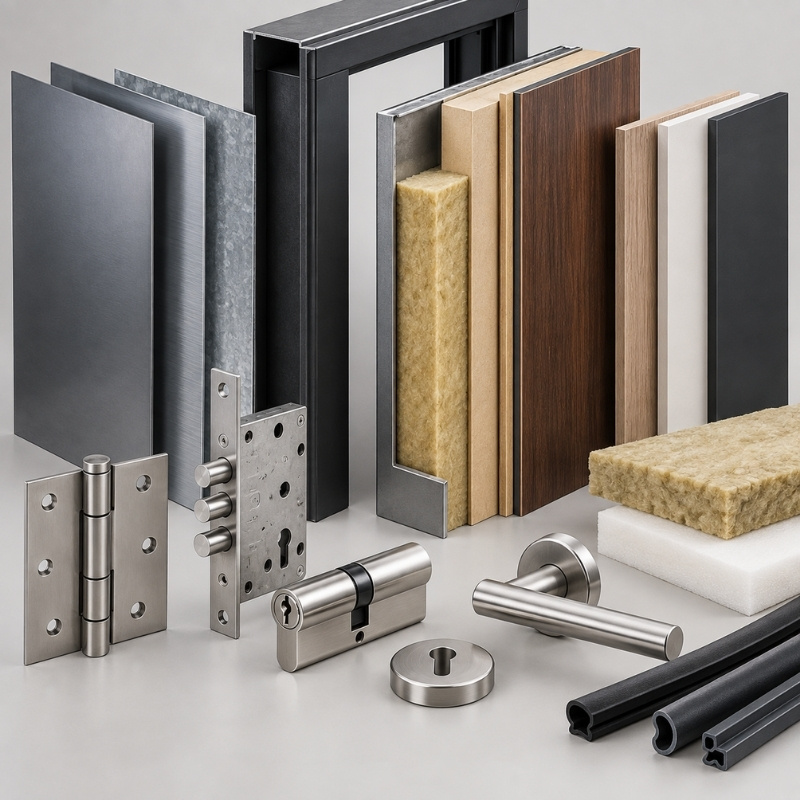
What Materials Are Used to Make a Steel Door?
Materials vary with the model, design and intended use. Common components include the following.
- Steel sheet: Forms the body and supporting structure.
- Metal profiles and structural members: Help provide structural integrity to the door leaf.
- Steel frame: Connects the door leaf to the building.
- Core materials: Fill the inside of the leaf, depending on the model.
- Surface panels and finishes: Provide a decorative surface suited to the location.
- Locking system: A main part of door security.
- Hinges: Support the leaf and allow it to move within the frame.
- Hardware: Includes handles, pull handles, door viewers and other fittings depending on the model.
Specifications vary between doors. Compare technical construction as well as appearance.
What Materials Are Used in the Door Body?
The supporting structure inside the leaf can use steel sheet and other metal members. Its construction varies by model and design.
Consider these points together when assessing the body.
- Steel sheet properties
- Construction of the leaf
- Joints between metal components
- Fit between the leaf and frame
- Connection of the lock and hinges to the body
- Manufacturing quality and workmanship
Sheet thickness is only one factor. Assess the complete door assembly.
What Is the Frame Made Of?
The frame surrounds the leaf and connects the door assembly to the building. It can be made from steel sheet and formed metal components.
The frame supports the leaf, aligns with the hinges and locking points, and anchors the assembly to the building.
When buying a door, check the construction of the frame and how well it fits the leaf.
What Type of Steel Sheet Is Used?
Sheet specifications vary with the manufacturing method, model, structural design and intended use.
When comparing sheet materials, consider the following alongside thickness.
- Type and technical properties of the sheet
- Where the sheet is used in the assembly
- Internal structure
- Frame construction
- Lock and hinge connections
- Manufacturing method and workmanship
Thicker sheet alone does not guarantee higher quality or security. Evaluate the complete door.
What Core Materials Are Used Inside a Steel Door?
Different models and designs can use different core materials to complete the internal structure of the leaf.
Depending on the model, the core can serve several purposes.
- Complete the internal structure of the leaf.
- Help limit heat transfer.
- Help reduce sound transmission.
- Meet design and manufacturing requirements.
Thermal and acoustic performance also depend on the leaf, frame, seals, joints and installation.
What Materials Are Used on Steel Door Surfaces?
Decorative materials and finishes allow different designs and can be selected for the intended application.
- MDF panels
- PVC finishes
- Composite surfaces
- Painted metal
- Decorative panels and other finishes
Consider whether the door will be sheltered inside a building or exposed to outdoor conditions, as well as the colour and pattern.
Why Do Locks and Hinges Matter on Steel Doors?
The steel body is important, and the lock and hinges also contribute to the security of the whole assembly.
Assess the following together.
- Door body
- Frame
- Locking system
- Hinges
- Connection points
- Installation
Consider the full system when buying a door, including how the hardware and structure work together.
What Hardware Is Used on Steel Doors?
Hardware contributes to ease of use and complements the design. Options vary by model.
- Door handles
- Pull handles
- Door viewers
- Lock components
- Hinge systems
- Decorative metal fittings
Choose fittings that are compatible with the door system and suited to its intended use as well as its appearance.
What Should You Consider When Choosing Steel Door Materials?
Choose materials for the installation location and purpose. An apartment door, villa entrance and construction project may have different requirements.
- Application: Identify whether the door is for an apartment, shared entrance, villa or project.
- Dimensions: Confirm the size of the installation opening.
- Body and frame: Review structural details.
- Finish: Choose a surface suited to indoor or outdoor conditions.
- Lock and hinges: Check compatibility with the door system.
- Design: Match the colour, pattern and model to the architecture.
Does Material Alone Determine Steel Door Quality?
Material quality matters alongside the production method, structural design, workmanship, fit of the components and installation.
Two doors made from similar materials can have different properties.
Compare materials, manufacturing, hardware, intended use and installation together.
What Information Should You Give the Manufacturer?
A clear description of requirements helps the manufacturer identify suitable models. Confirm technical details before ordering, especially for projects and bulk purchases.
When asking for a quote or product information, provide the following where possible.
- Installation location
- Quantity
- Door dimensions
- Preferred model or design
- Colour and finish
- Indoor or outdoor use
- Any project specific requirements
This information helps the manufacturer identify suitable options and prepare an accurate quote.
How Can You Explore Brango Steel Door Models?
Consider materials alongside intended use, design, finish and the full construction of the door. Brango Steel Door offers models for different architectural needs and applications.
Browse Brango steel door models for individual purchases, projects or bulk orders, and ask about the models, dimensions and other details you need.
Disclaimer. This article provides general information. Materials, technical specifications, dimensions, hardware and performance vary by model and intended use. Confirm the current specifications with Brango before purchasing or making project decisions.