
How to Maintain a Fire Door
Why Should Fire Doors Be Maintained Regularly?
Fire doors open and close repeatedly in daily use. Doors in apartment buildings, hospitals, hotels, schools, factories, shopping centres and offices can develop mechanical wear over time. Without regular maintenance, small faults that are hard to notice can eventually prevent the door from working properly.
During a fire, the door must close properly to help delay the spread of fire and smoke to other areas. Keeping it in working order is essential.
Regular maintenance helps in several ways.
- Keeps the door opening and closing smoothly.
- Helps identify early wear in the hinges and lock.
- Confirms that the panic bar operates correctly.
- Tracks the performance of the door closer.
- Identifies damage or distortion in fire and smoke seals.
- Helps preserve the door’s service life.
- Helps prevent unexpected failures.
Schedule maintenance at regular intervals. Frequent checks are especially important where the door sees heavy use.
Check for incompatible replacement hardware, unauthorised holes in the door leaf and changes that could compromise the assembly.
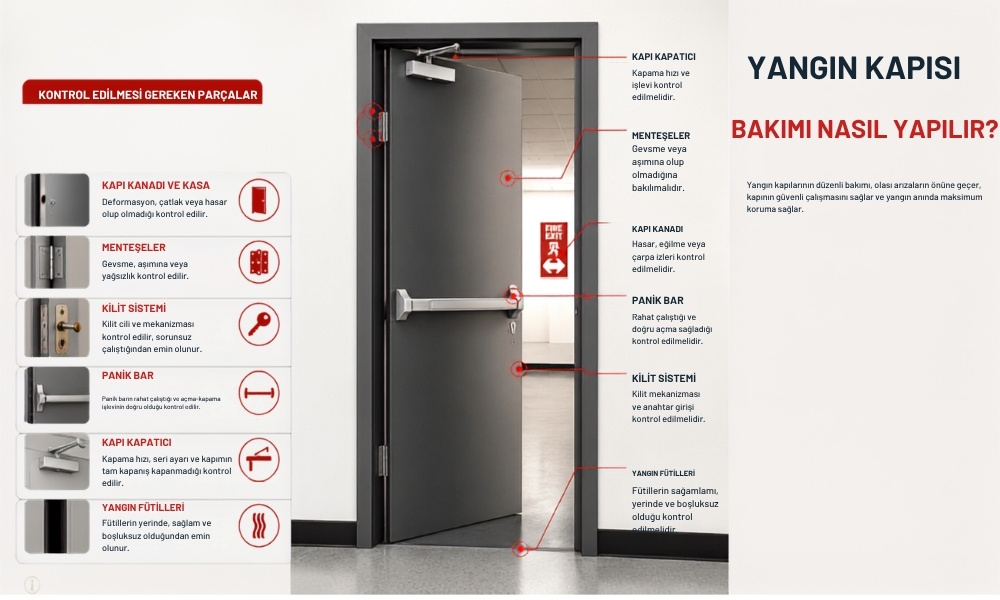
Which Components Should Be Checked During Fire Door Maintenance?
Inspect all components that contribute to safe operation. Even a minor hinge issue or a door closer that is out of adjustment can affect performance.
Use the following table to guide the inspection.
| Component | What to check |
|---|---|
| Door leaf | Look for impact damage, bending or distortion. |
| Steel frame | Check for damage, looseness or problems with fixings. |
| Hinges | Check for looseness, wear or unusual noise. |
| Locking system | Check that the lock mechanism operates correctly. |
| Panic bar | Check that pressing it opens the door easily. |
| Door closer | Check that the door closes automatically. |
| Fire seals | Look for wear, tears or missing sections. |
| Door handle | Check for play, looseness or distortion. |
| Glazed models | Visually inspect the glass and its fixings. |
Investigate any rubbing, stiffness or failure to close. A disabled closer or a malfunctioning panic bar can pose a serious safety risk.
Keep labels, technical information and product identification intact. Unauthorised alterations or incompatible replacement hardware can affect the door’s technical performance.
How Often Should Fire Doors Be Maintained?
Maintenance frequency depends on how heavily the door is used and on the building in which it is installed. A hospital or shopping centre door used hundreds of times a day has different maintenance needs from a plant room door used less often.
Plan inspections around actual use. Check doors more frequently in buildings with high foot traffic.
Consider the following when planning maintenance.
- Daily use of the door
- Intended use of the building
- Frequency of panic bar use
- Performance of the door closer
- Wear on the hinges and lock
- Exposure to outdoor conditions
- Previous repairs
If the door becomes difficult to open or close, rubs, fails to close or latch, or has a faulty panic bar, inspect it promptly.
Quality materials, sound manufacturing and regular checks all help maintain safety throughout the door’s service life. Browse Brango’s fire door models for options suited to your project.
What Are Common Fire Door Problems?
Fire doors can remain in safe use for many years. Heavy use, incorrect installation, misuse and missed inspections can lead to faults over time. Even minor faults can keep a door from performing as expected in a fire.
Regular visual inspections are particularly important in busy hospitals, hotels, schools, factories, shopping centres and apartment buildings.
Common problems and their possible effects are listed below.
| Problem | Possible effect |
|---|---|
| Door does not close fully | The door may be less effective at limiting the spread of fire and smoke. |
| Panic bar is hard to operate | Exit during an emergency evacuation may be delayed. |
| Lock mechanism jams | The door may fail to close securely. |
| Hinges are loose | The door may sag. |
| Door closer fails | The door may stay open. |
| Fire seals are worn | Smoke sealing performance may deteriorate. |
| Frame is distorted | The door may fail to operate properly. |
| Door rubs against the frame | It may become harder to open and close. |
Holes drilled after installation, incompatible hardware, unsuitable replacement locks and unauthorised alterations to the panic bar can compromise the assembly. Assess proposed changes against the manufacturer’s recommendations.
What Are the Risks of Neglecting Fire Door Maintenance?
Missed inspections can shorten the door’s service life and impair its safety performance. In busy buildings, small faults can worsen until the door can no longer perform its intended function.
Neglected fire doors can develop the following problems.
- Failure to close automatically
- Panic bar malfunction
- Lock mechanism failure
- Poor fit between the door and frame
- Ineffective smoke seals
- Difficulty opening or closing the door
- Loose hinges or fixings
- Reduced service life
Objects left in front of the door, wedges holding it open and disabled closers can all interfere with its intended operation.
Maintenance addresses existing faults and helps identify problems early so the door stays safe to use.
What Should You Check When Maintaining a Fire Door?
Preserve the original assembly. The leaf, frame, hinges, lock, panic bar, closer and fire seals work together to provide safe operation.
Carry out the following checks.
- Check that the door closes fully.
- Observe whether the door closer works correctly.
- Check that the panic bar moves freely.
- Test that the lock mechanism operates smoothly.
- Look for loose hinges.
- Check that fire seals are complete and undamaged.
- Inspect where the door meets the frame.
- Check for unauthorised modifications.
Avoid abrasive chemicals when cleaning the surface. Inspect hinges and moving parts according to the manufacturer’s guidance and protect the door from impacts to prolong its service life.
A well made fire door can provide safe service for many years when installed correctly and checked regularly. Consider manufacturing quality, technical specifications, certification and suitability for the intended use alongside price.
Disclaimer. This article provides general information. Fire door maintenance and inspection procedures can vary according to the product specifications, the manufacturer’s instructions and the conditions in which the building is used. Consult the relevant technical documents and seek advice from a qualified specialist where needed.