
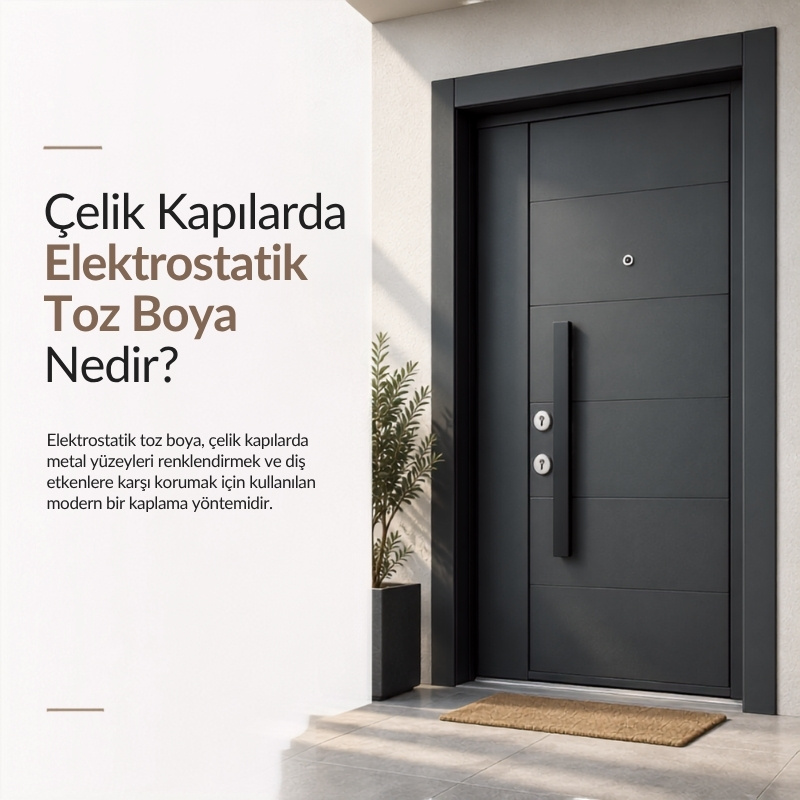
What Is Electrostatic Powder Coating on Steel Doors?
Electrostatic powder coating uses dry powder to colour and protect metal. Charged particles adhere to the surface and cure at a suitable temperature to form a continuous coating. On steel doors, the finish improves appearance and can help protect the metal from environmental exposure.
The steel body, frame, lock, hinges and other structural components determine door security. Powder coating provides a decorative and protective finish on suitable metal surfaces. Compare steel door models based on the installation location and design requirements.
General Properties of Electrostatic Powder Coating
Special equipment sprays dry powder onto the metal. An electrostatic charge helps the particles adhere, and curing forms a continuous film.
The result depends on powder chemistry, surface preparation, film thickness, curing conditions and the condition of the metal. A suitable coating system adds colour and can help protect the surface.
- Dry powder finish for metal
- Choice of colours and finishes
- Continuous coating on properly prepared metal
- Decorative appearance and potential protection
- Matt, gloss and textured options
- Suitable for various metal parts of steel doors
How Is Electrostatic Powder Coating Used on Steel Doors?
Remove oil, dirt, rust and other contaminants that could affect adhesion before coating. Apply the powder and cure it under the conditions specified for the coating system.
Door frames, metal surrounds, decorative sections and other steel parts can be coated, depending on the model and construction.
Surface preparation, even application and correct curing affect performance alongside powder quality. The same powder can produce different results if these conditions vary.
Benefits of Electrostatic Powder Coating on Steel Doors
The coating can reduce the metal’s direct exposure to environmental conditions while providing colour to complement the design.
Coated metal details can be coordinated with wood effect panels, composite surfaces, glass and fittings in modern doors.
- Gives metal a decorative finish.
- Enables different colours.
- Can help protect the metal from environmental exposure.
- Suits modern and traditional designs.
- Can produce an even surface when correctly applied.
- Can be used on different metal door parts.
Benefits depend on the coating and application. For exterior doors, check whether the specified system is suitable for outdoor exposure.
Is Electrostatic Powder Coating Durable?
The right powder and application conditions can produce a durable finish. Resistance to environmental conditions depends on the powder chemistry and intended use.
Choose an exterior coating system for doors exposed to direct sun, moisture, rain or temperature changes. A sheltered apartment door and an exposed villa entrance face different conditions.
Rust, oil and other contaminants can impair adhesion. Curing outside the conditions specified for the product can also reduce performance.
Assess the powder type, surface preparation, application, curing and installation environment together.
Colour and Finish Options for Electrostatic Powder Coating
Available shades depend on the coating system and colour chart. Metal components can be coordinated with the façade, decorative door panel, window frames and surrounding architecture.
Anthracite, black, grey, white and brown are common choices. Other shades may be available, and the surface finish also affects the design.
- Matt surfaces
- Gloss surfaces
- Textured finishes
- Dark and light colours
- Neutral colours for modern architecture
- Colours coordinated with the decorative door panel
Choose a coating system suited to expected sunlight and weather exposure as well as the desired appearance.
Electrostatic Powder Coating Compared with Other Painting Methods
Powder coating uses dry particles, while liquid paint is applied in liquid form. Application and drying or curing vary by system.
| Feature | Electrostatic powder coating | Liquid paint systems |
|---|---|---|
| Form | Dry powder particles | Liquid paint |
| Adhesion during application | Assisted by an electrostatic charge | Depends on the liquid paint system |
| Final treatment | Requires curing | Requires drying or curing, depending on the paint |
| Colours | Options depend on the product colour chart | Options depend on the paint system |
| Applications | Common on suitable metal surfaces | Can be used on different surfaces, depending on the product |
Choose the method based on the substrate, intended use, finish, environmental conditions and production requirements.
What Should You Check When Choosing a Steel Door with Powder Coating?
Start with the installation location. A door inside an apartment building and an exposed villa or building entrance face different conditions. The coating system should match the intended use.
Check the appearance, colour consistency and application quality. Also assess the door assembly, which determines security and operation.
- Confirm the installation location.
- Check coating suitability for the conditions.
- Assess surface preparation and application quality.
- Match colour and finish to the architecture.
- Evaluate the door body and frame separately.
- Check the lock, hinges and other security components.
Browse Brango steel door models for finishes and designs suited to the location. For project orders or larger quantities, see wholesale steel doors.
Disclaimer. Durability and performance depend on the powder, metal preparation, application, curing and installation environment. Refer to the product specifications when assessing UV, corrosion, moisture or weather resistance.