
The Difference Between a Fire Door Handle and a Panic Bar
What Is the Main Difference Between a Fire Door Handle and a Panic Bar?
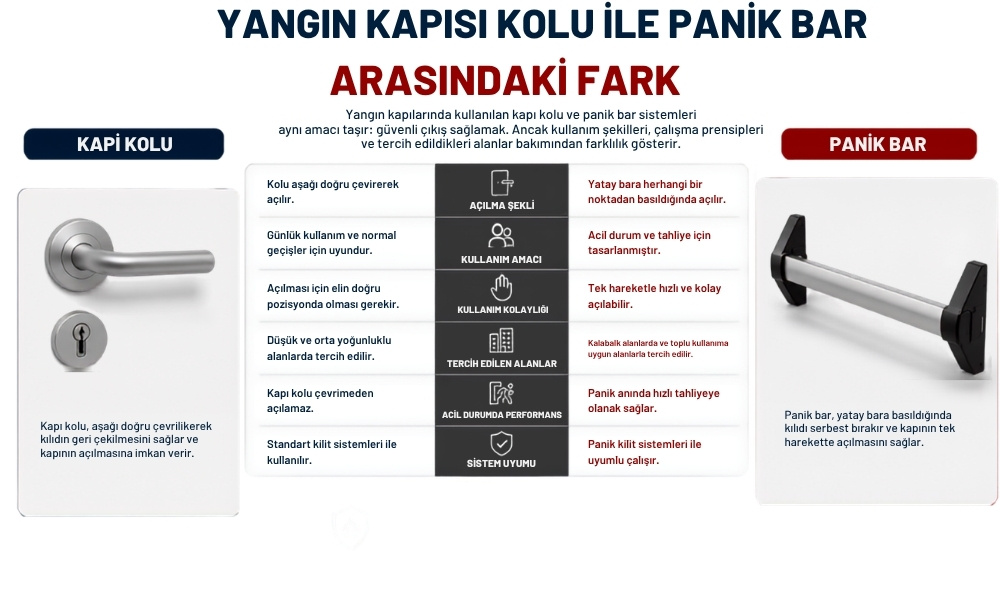
A fire door handle and a panic bar both open a door, but they work differently. A conventional handle operates the locking mechanism when pressed down. A panic bar runs horizontally across the door leaf and releases the latch when pushed, allowing the door to open quickly.
A panic bar lets people open the door in a single action where emergency evacuation is needed. A door handle is generally used for routine access.
| Feature | Door handle | Panic bar |
|---|---|---|
| How it opens | Press the handle down | Push the horizontal bar |
| Typical use | Routine entry and exit | Emergency evacuation |
| Speed of exit | Moderate | High |
| Heavy use | Limited suitability | Better suited |
Where Are Fire Door Handles Used?
A fire door handle may suit areas with lower traffic. It can be sufficient where relatively few people use the door during the day or where evacuation capacity is assessed differently.
Suitable locations vary by project and may include the following.
- Technical rooms
- Storage areas
- Staff entrances
- Plant rooms
- Service areas
- Areas with low occupancy
Consider both the building’s intended use and the project requirements when deciding where to use a door handle.
Where Should Panic Bars Be Used?
Panic bars help people open doors quickly and easily during an emergency evacuation in buildings with many occupants. Users can open the door by pressing the bar without looking for a handle.
Panic bars are commonly used in the following places.
- Schools
- Hospitals
- Hotels
- Shopping centres
- Cinemas
- Theatres
- Sports halls
- Factories
- Office buildings
- Public and shared spaces
A panic bar is one of the fittings that help people evacuate buildings with heavy foot traffic.
Which Is Better for Emergency Evacuation?
In an emergency, occupants need to leave the building quickly and safely. In busy buildings, a panic bar offers the advantage of opening the door in a single action.
A door handle can also work safely when used correctly. Under stress, pushing a horizontal bar can be easier than operating a handle.
| Comparison | Door handle | Panic bar |
|---|---|---|
| Speed of operation | Standard | Very fast |
| Opens in a single action | No | Yes |
| Use by crowds | More limited | Better suited |
| Emergency use | May be suitable | Offers an advantage |
What Should You Consider When Choosing a Fire Door Handle or Panic Bar?
Consider the building, occupancy, evacuation capacity, door dimensions and project requirements alongside appearance and cost.
- Type of building
- Occupancy levels
- Whether the door is on an escape route
- Single or double leaf configuration
- Opening direction
- Locking system
- Compatibility with the door closer
- Project and technical requirements
Brango offers fire doors that can be fitted with a handle or panic bar to suit different projects. Consider the location, project details and technical requirements when selecting a product.
Disclaimer: This article provides general information. The choice of a handle or panic bar for a fire door should be based on the building’s use, applicable technical regulations and project requirements.