
What Is Composite Cladding on Steel Doors?
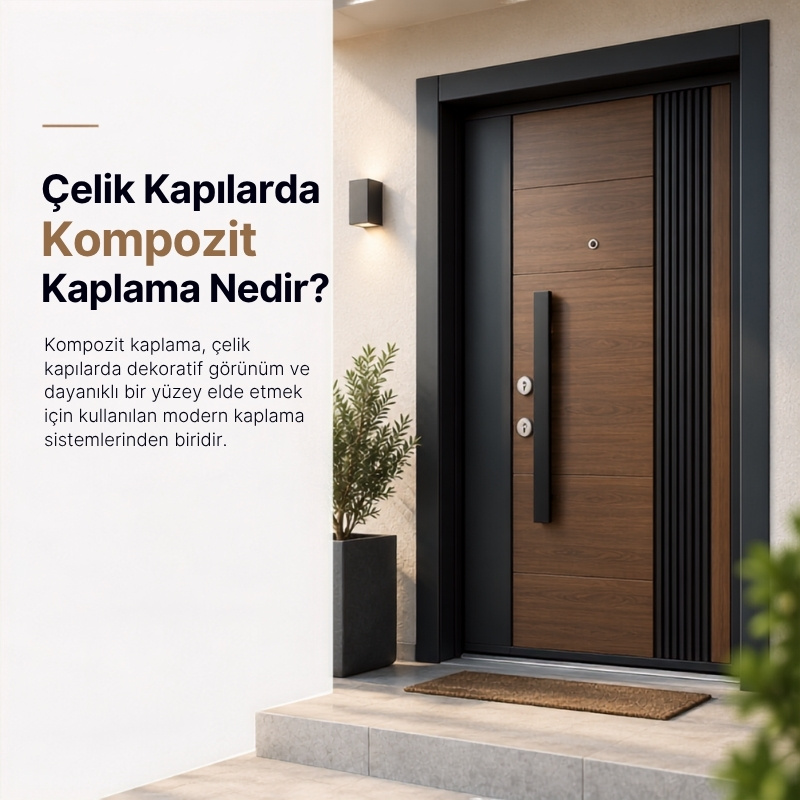
Composite cladding is a decorative finish for the inside or outside of a steel door. Composite materials can combine metals, minerals, polymers or different layers. Door manufacturers choose them for appearance, variety of colours and patterns, ease of care and surface durability.
The steel body remains the supporting structure. Security depends on the steel construction, frame, locking system and hinges, while the cladding contributes to the appearance and surface performance. Choose finishes for steel door models according to the location and architectural requirements.
General Properties of Composite Cladding
Composite cladding combines multiple materials or layers. The resulting surface can offer different properties depending on its intended use and the technical specification of the panel.
Solid colours, metallic effects, matt finishes and wood patterns allow the same steel construction to suit different architectural styles.
- Choice of colours and patterns
- Suitable for simple, modern door designs
- Can be easy to clean and maintain, depending on the material
- Suitable for different panel and design applications
- Adds a decorative finish to the metal body
- Options for interior and exterior surfaces
Composition, thickness, surface protection, UV resistance, moisture resistance and installation method affect performance. Consider the installation environment as well as appearance.
How Is Composite Cladding Used on Steel Doors?
It is usually applied to the decorative face of the door leaf. The panel and installation method depend on the door model and the technical properties of the cladding.
Exterior surfaces can face rain, sunlight, temperature changes and physical wear. Specify panels suitable for the actual exposure. Apartment doors in sheltered corridors can use different finishes.
Composite panels can be combined with smooth surfaces, vertical or horizontal lines, metal fittings, glass and contrasting colours on villa, apartment and residential entrances.
Consider the front of the door along with frame colour, handles, fittings, the façade and surrounding architectural details.
Benefits of Composite Cladding on Steel Doors
Composite cladding offers design flexibility beyond traditional wood patterns. It can suit modern, understated and other architectural styles.
Some panels offer greater resistance to scratches, moisture and outdoor exposure. This depends on the panel and should be checked against the manufacturer’s technical data.
- Wide choice of colours for modern doors
- Compatibility with varied architectural styles
- Potentially easy cleaning
- Can be combined with metal and glass details
- A coordinated decorative appearance
- Suitable for different sizes and panel layouts
Choose a finish that will retain its appearance under the expected conditions, particularly when exposed to sunlight and weather.
Is Composite Cladding Durable?
Durability depends on the material and workmanship. Some panels are made for outdoor use, while others are intended for indoor or controlled conditions.
Check resistance to moisture, sunlight, temperature changes, impacts and scratching. Edge treatment and installation also matter. Poor installation can shorten service life even when the panel itself is suitable.
Exterior doors and apartment doors in sheltered corridors face different conditions. Choose the cladding for the actual location.
What Design Options Does Composite Cladding Offer?
Composite finishes suit modern steel doors and can be combined with plain surfaces, geometric details, colour combinations and metal fittings.
Grey, anthracite, black, brown and lighter shades are common. Wood patterns and metallic finishes may also be available, depending on the product range.
- Smooth and simple surfaces
- Matt or satin finishes
- Wood patterned surfaces
- Metallic finishes
- Geometric lines and panel details
- Combinations with glass and metal fittings
- Doors in one or two colours
Consider the façade, lighting at the entrance and colours of nearby frames to coordinate the door with its surroundings.
Composite Cladding Compared with Other Door Finishes
Other finishes include PVC, decorative surfaces applied to MDF, laminate, natural wood veneer and painted metal. They differ in appearance, maintenance, outdoor performance and design options.
| Finish | General properties | Design options |
|---|---|---|
| Composite cladding | Combines different layers or materials. | Can offer modern colours and patterns. |
| PVC finish | Decorative surface based on PVC. | Available in wood effects and other decorative patterns. |
| Natural wood veneer | Thin layers of real wood applied to the surface. | Natural variations in grain and colour. |
| Laminate | A decorative surface made of layers. | Consistent finishes in a range of patterns. |
| Painted metal | A metal surface finished with a suitable paint system. | Solid colours and a modern appearance. |
Compare technical suitability and appearance based on location, outdoor exposure, maintenance, architectural design and budget.
What Should You Check When Choosing a Steel Door with Composite Cladding?
Identify where the door will be installed. Apartment, villa and shared building entrances may need different surface properties. Exterior doors need a finish suitable for the expected weather exposure.
For security, evaluate the body, frame, lock, hinges and installation. Composite cladding mainly contributes to the decorative finish and surface performance.
- Identify the installation location.
- Check suitability for indoor or outdoor use.
- Assess exposure to sunlight and moisture.
- Coordinate colour and pattern with the building.
- Evaluate the lock and security system separately.
- Confirm door dimensions and installation conditions.
Browse Brango steel doors for finishes and designs suited to your project. For large quantities or project orders, see wholesale steel doors.
Disclaimer. Technical properties vary by material, manufacturer, product range and installation method. Refer to the product documentation for outdoor durability, UV performance, moisture resistance and other technical specifications.