
Differences Between 30, 60, 90 and 120 Minute Fire Doors
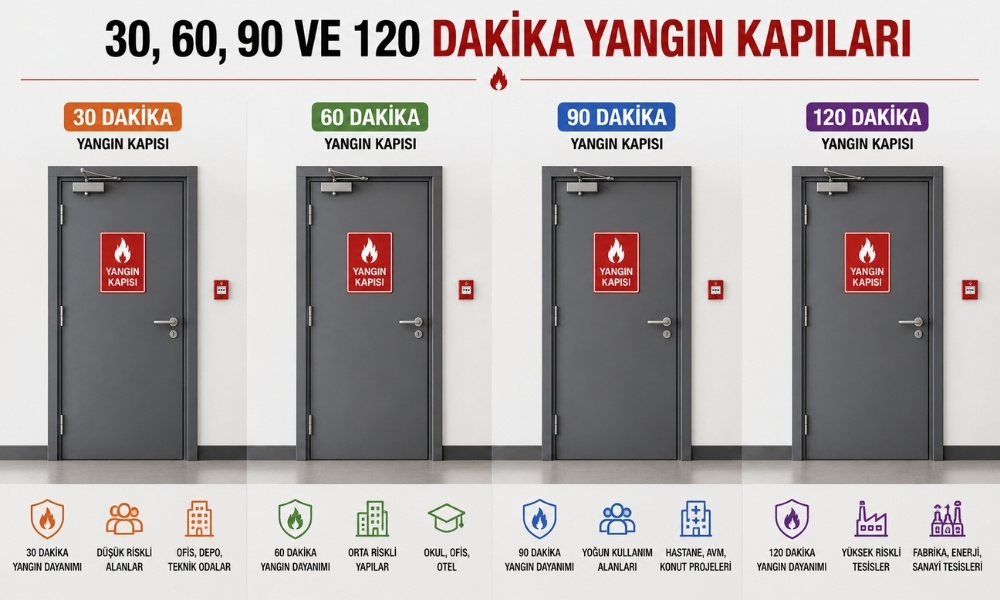
What Does a Fire Door’s Fire Resistance Rating Mean?
The 30, 60, 90 and 120 minute ratings indicate how long a door maintains its performance under specified fire test conditions. During that time, the door is expected to stay in place and limit the spread of fire and heat to other areas according to defined criteria.
The rating applies to the tested assembly, including the following components.
- Door leaf
- Steel frame
- Hinges
- Locking system
- Panic bar or door handle
- Door closer
- Fire and smoke seals
- Fire-resistant glazing system, where fitted
- Fixings
Using hardware outside the tested assembly or failing to follow the installation specifications can impair the door’s performance.
Fire resistance ratings support the following objectives.
- Delay fire spread to other areas
- Help limit smoke passage
- Keep escape routes usable for a period of time
- Allow more time for evacuation
- Allow additional time for firefighters to respond
The appropriate rating depends on the building’s intended use, architectural plans and applicable technical requirements.
Where Are 30 Minute Fire Doors Used?
30 minute fire doors may suit areas that need fire protection for a defined period and do not require a higher rating. Suitability depends on the project’s technical requirements.
Typical applications may include the following.
- Small commercial buildings
- Plant rooms
- Office partitions
- Common areas in apartment buildings
- Storage compartments
- Low-risk service areas
Where greater fire resistance is required, the building risk assessment and project specifications may call for a 60, 90- or 120 minute door.
Key factors include the following.
- Building use
- Length of escape routes
- Fire load in the compartment
- Occupancy levels
- Architectural plans
- Applicable technical specifications
Panic hardware, dimensions, opening direction, smoke seals and installation quality also matter for safety.
What Are the Differences Between 60, 90 and 120 Minute Fire Doors?
Higher ratings can suit different types of buildings and areas. Select the rating that meets the project requirements.
The first table compares general characteristics of all four ratings.
| Feature | 30 minutes | 60 minutes | 90 minutes | 120 minutes |
|---|---|---|---|---|
| Fire resistance rating | 30 minutes | 60 minutes | 90 minutes | 120 minutes |
| Application | Low-risk areas | Medium-risk buildings | High-traffic areas | High-risk facilities |
| Fire compartments | Basic protection | Higher protection | Protection for larger areas | Maximum protection needs |
| Escape routes | Supports evacuation | More time for evacuation | High occupant traffic | Critical escape scenarios |
| Typical buildings | Small commercial spaces | Schools and offices | Hospitals and hotels | Industrial facilities |
The differences can extend beyond door thickness to the core, steel construction, seals, hardware and integrity of the assembly. Doors with different ratings should not be substituted for one another.
The second table summarizes differences to consider during selection.
| Comparison | 30 minutes | 60 minutes | 90 minutes | 120 minutes |
|---|---|---|---|---|
| Risk level | Low | Medium | High | Very high |
| Contribution to evacuation time | Basic | Good | Very good | Maximum |
| High foot traffic | Limited | Suitable | More suitable | Critical areas |
| Industrial use | Rare | Suitable | Common | Most often preferred |
| Technical requirement | Project-specific | Project-specific | Project-specific | Project-specific |
Specifying a higher or lower rating than required can be unsuitable for the project or its budget.
Consider these criteria together.
- Building use
- Fire load
- Escape routes
- Door location
- Door dimensions
- Single- or double-leaf configuration
- Panic hardware
- Smoke leakage requirements
- Wall type
- Applicable project and technical specifications
Brango offers fire doors with different ratings. To select a door for your project, consider its location, dimensions, opening direction and required rating together.
How Is the Fire Resistance Rating Determined?
Specify the fire resistance rating based on building characteristics, the fire scenario, escape routes, occupancy and project requirements. A small commercial space, a busy hospital and an industrial facility may need different door specifications. Assess where the door will be installed during the design stage.
The main selection criteria are as follows.
- Building use
- Fire compartment locations
- Length of escape routes
- Occupancy levels
- Fire load
- Door location
- Applicable project and technical specifications
- Required fire resistance performance
Along with the rating, assess dimensions, leaf configuration, panic hardware, smoke sealing and accessories. Brango offers fire door models with technical options for different projects.
Is the Rating in Minutes Enough When Selecting a Fire Door?
Two doors with the same 30, 60, 90- or 120 minute rating can have different technical specifications.
When specifying a fire door, consider the criteria below together.
| Feature to check | Why it matters |
|---|---|
| Fire resistance rating | Determines the protection level for the project. |
| Certification status | Shows the door’s tested performance. |
| Door dimensions | Must suit the project and installation area. |
| Panic hardware | Facilitates emergency evacuation. |
| Door closer | Closes the door automatically. |
| Smoke seals | Help restrict smoke passage. |
| Single or double leaf | Depends on intensity of use. |
| Installation quality | Directly affects door performance. |
Focusing only on the rating can lead to other specifications being overlooked. Ask the manufacturer for technical support when selecting the product.
How Do You Select the Right Fire Door for Your Project?
Consider the architectural plans, the intended installation area and the building’s technical requirements together.
Answer these questions to determine the right specification.
- Where will the door be installed?
- Is a single or double leaf needed?
- What clear opening size is required?
- Will the door use a panic bar?
- Is glazing or a louver required?
- Will the door open to the right or left?
- How many minutes of fire resistance are required?
- Is smoke control required?
- Will the door serve a high-traffic area?
These details help identify a suitable model and avoid unnecessary costs. A product that does not match the plans may need changes later.
Brango manufactures project-specific fire doors in various sizes, with single or double leaves, panic bars, glazing and other hardware options.
Why Choose Brango Fire Doors?
Appearance, technical performance, manufacturing quality and suitability for the project all matter when choosing a fire door. Brango manufactures project-specific doors for different sectors.
Brango’s fire door options include the following.
- Custom dimensions
- Single- and double-leaf configurations
- Models with panic bars
- Glazed and louvered options
- A choice of colors
- Industrial and commercial applications
- Production capacity for large projects
- Domestic and international shipping support
Brango can help select a model based on project details and plan production around dimensions, opening direction, hardware and the required rating.
Visit the Brango fire door page for more information, models and project options.
Disclaimer: This article is for general information. Determine the required fire resistance rating based on the project, applicable technical regulations and intended building use. Consult a qualified professional when selecting and installing a product.